
How to Stop Expecting Bad News All the Time
Published August 2026•5 min read
Why your brain keeps waiting for the other shoe to drop—and one practical question that can help.
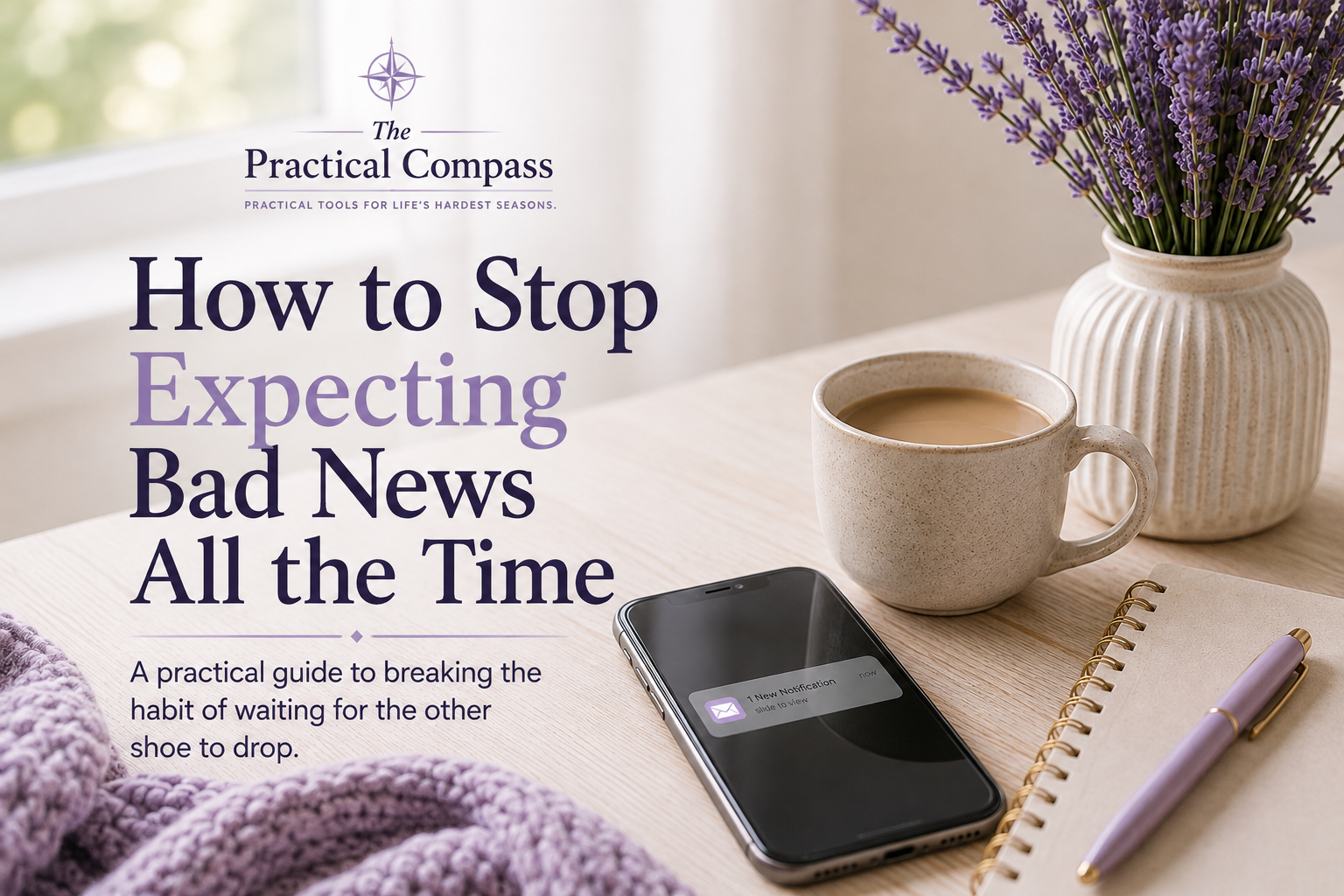
There was a season of my life when every morning started exactly the same.
Before my feet even hit the floor, I reached for my phone.
Not because I wanted to check social media.
Not because I was excited to see what had happened overnight.
I was looking for danger.
First, I checked my USPS Informed Delivery email. Then my email. Then my text messages. Then my voicemail.
If there was an envelope I didn't recognize, my stomach dropped.
If an unknown number called, my heart immediately started racing. My hands would shake. My body would tense.
Sometimes I felt like all the air had left the room before I even knew what the notification was about.
Looking back now, I realize something I couldn't see then.
I wasn't checking my mail.
I was checking for danger.
When Life Teaches You to Expect the Worst
Most people don't wake up one morning suddenly expecting bad news.
It usually happens slowly.
After enough difficult conversations...
Enough unexpected bills...
Enough legal letters...
Enough painful phone calls...
Your brain quietly learns a lesson: "Stay alert. Something else could happen at any moment."
For a while, that response may even help you. It keeps you organized. Prepared. Ready to respond.
But eventually something changes.
Life begins to calm down... and your mind doesn't.
Your phone buzzes. Your heart races. Someone says, "Can we talk?"—and before they've said another word, your brain has already written the worst possible ending.
If you've ever wondered, "Why do I always think something bad is going to happen?"—you're not alone.
The Mistake I Didn't Realize I Was Making
For a long time, I thought staying alert was protecting me.
If I checked everything quickly enough... if I stayed one step ahead... maybe nothing would catch me off guard.
Instead, I was exhausting myself by living through problems that hadn't even happened. Some of them never did.
I wasn't responding to facts.
I was responding to possibilities.
And there's a huge difference.
One Question That Changed Everything
One day I caught myself doing it again.
A notification appeared on my phone. Before I opened it, I had already decided it was probably bad news.
That's when I stopped myself and asked one simple question.
"What do I actually know right now?"
Not, "What am I afraid this means?"
Just: What do I actually know?
Usually the answer was surprisingly small.
I knew I had received a notification. I did not know it contained bad news.
I knew someone had called. I did not know why.
I knew there was an email. I did not know what it said.
That one question helped me separate facts from fear.
Not perfectly. Not overnight. But consistently.
Try This Today
The next time your phone buzzes, pause for just a moment before you open it. Ask yourself:
- What do I actually know?
- Notice the story your mind immediately wants to write.
- Those two things are often very different.
You may not be able to stop the first wave of fear from showing up. But you can begin deciding whether it gets to stay.
That choice changed more of my life than I ever expected.
Practical Compass Reflection
For years I believed every fearful thought deserved my attention.
I don't believe that anymore.
Today I still have moments. My heart still races sometimes. Certain situations can still pull me backward if I'm not careful.
But I've learned something I wish someone had told me years ago.
You don't have to let everything in.
Not every notification deserves your peace. Not every possibility deserves your attention. Not every fearful thought deserves a permanent place in your mind.
Learning that wasn't passive. It took practice. But it was one of the first steps toward getting my life back.

Carlye Pascher
Founder, Practical Compass
Keep Building Your Practical Compass
If this article resonated with you, The Time Filter™ is a free guide designed to help you decide what actually deserves your time, energy, and attention—especially when everything feels urgent.
Continue Reading
- How to Stop Overthinking Every Decision
- The Difference Between Urgent and Important Coming Soon
- The Text Message I Never Should Have Answered Coming Soon